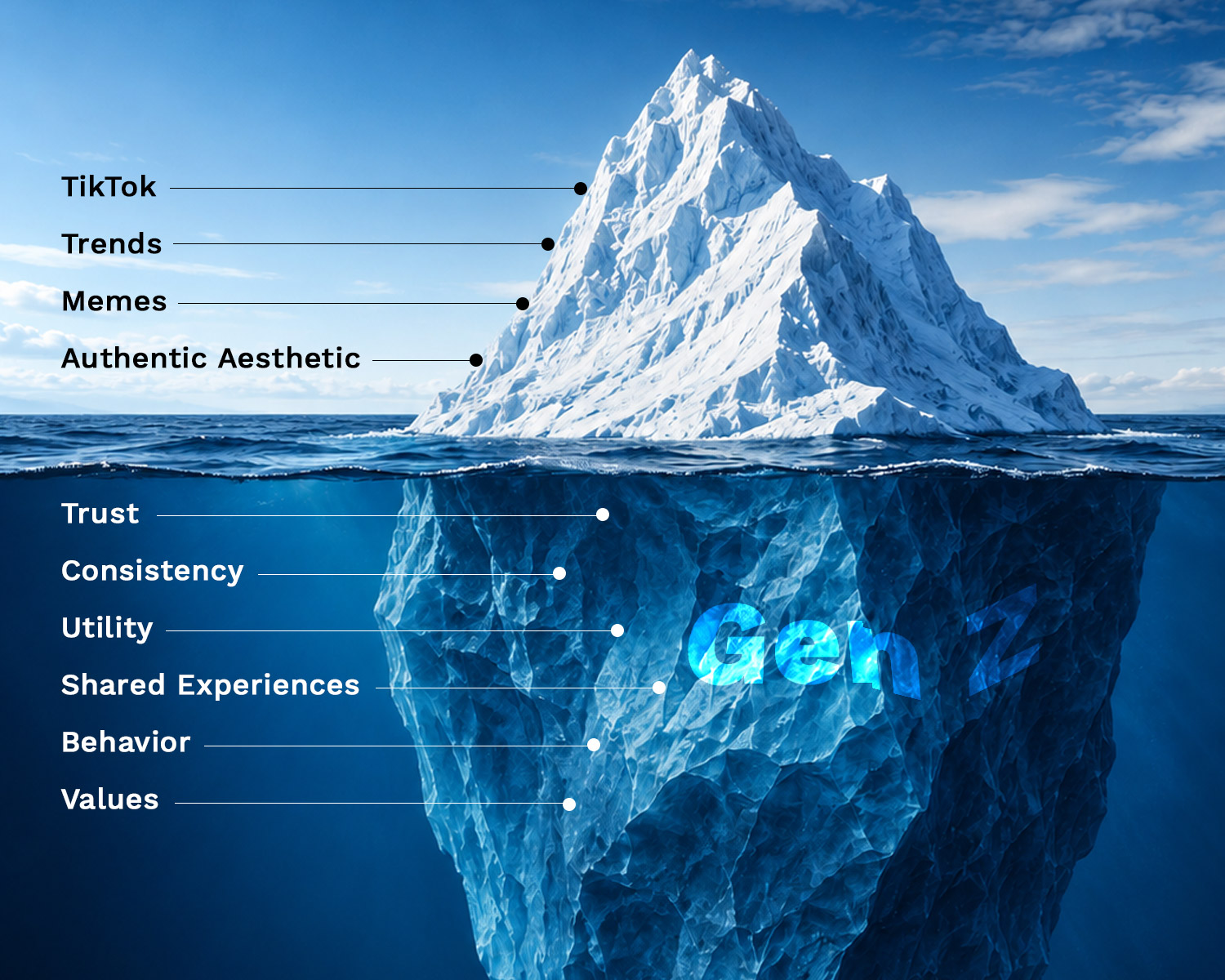
What Advertisers Get Wrong About Gen Z
For nearly a decade, Gen Z has been treated as one of advertising’s most fascinating puzzles. Agencies build trend reports around them. Brands hire consultants to decode them. Entire campaigns are developed around the assumption that Gen Z behaves differently from every generation before it. The irony is that many of the industry’s assumptions are wrong.
The biggest mistake advertisers make is misunderstanding what actually drives their decisions, which isn’t what you may think it is.
In Part 1, we’ll tackle the four misconceptions about who Gen Z is and how they relate to brands. In Part 2, we’ll turn to what actually moves them to buy—and where the real opportunity lies.

Mistake #1: Treating Gen Z Like a Monolith
Marketers often speak about Gen Z as if 70 million people share the same worldview. In reality, Gen Z is one of the most fragmented generations in modern history. A 15-year-old high school student, a 22-year-old recent graduate and a 28-year-old professional may all technically belong to Gen Z, but their priorities, spending habits and media consumption patterns are different.
The lesson for advertisers is simple: demographic targeting alone is increasingly ineffective. Interest-based and behavior-based segmentation matter far more than generational labels. The generation is united less by shared interests and more by shared experiences: growing up with smartphones, social media, economic uncertainty and constant access to information. Every marketing brief seems to contain the word “authentic.” Which they should. But the problem is that many brands interpret authenticity as an aesthetic rather than a behavior.
Mistake #2: Thinking Authenticity Is a Creative Style
They create shaky-camera videos, use lowercase text, add trending music and assume they are being relatable. Gen Z is remarkably skilled at detecting manufactured authenticity because they’ve grown up surrounded by influencer marketing and algorithmic content. They judge authenticity by whether a brand consistently acts in ways that align with its stated values.
A polished advertisement can feel authentic. A casual TikTok can feel fake. Authenticity is credibility, not always related to production style.
Mistake #3: Assuming Gen Z Hates Advertising
Conventional wisdom says Gen Z ignores ads, but the reality is Gen Z consumes more content than perhaps any generation in history. They follow creators who recommend products. They watch unboxing videos. They seek reviews before purchasing. They actively engage with brand content when it provides value.
Like all generations, they dislike interruptions. The most successful advertising today earns attention by entertaining, informing, educating or helping people make decisions.

Mistake #4: Confusing Trends with Culture
Many brands chase viral moments because they fear irrelevance. By the time a large organization approves a campaign built around a trend, that trend is often already dead.
Gen Z understands the difference between participating in culture and exploiting it. They can immediately tell when a brand is trying too hard to appear current. The strongest brands focus on enduring cultural truths rather than temporary internet moments.
Coming Up in Part 2
So far, we’ve looked at who Gen Z is and how they read brands. But understanding the audience is only half the picture. In Part 2, we’ll examine the assumptions advertisers make about what actually drives Gen Z to buy—from the limits of purpose-driven marketing to why trust beats reach and why the brands that win are ultimately the most useful, not the loudest.